Restaurant A-putt is certified under the European Charter for Sustainable Tourism
It confirms our commitment to the environment, sustainability and recycling.
Restaurant A-putt is one of the restaurants accredited under this charter, coordinated by the Montgrí, Medes Islands and Baix Ter Natural Park.
These are some of the actions we take to help become more sustainable:
We buy from local suppliers and producers.
We offer seasonal products and local specialities.
We use separate containers for each type of waste.
We use reusable, returnable or recyclable packaging.
We carry out a customer satisfaction survey and analyse the results to improve.
We provide restaurant customers with information about the Natural Park.
If you would like more information about the Natural Park, click here to find out more:
The Natural Park
The Montgrí, Medes Islands and Baix Ter Natural Park is a protected area that captivates visitors with its beauty.The Montgrí mountain, with its well-known silhouette resembling a bishop dipping his feet into the water, is a magnificent viewpoint offering spectacular views over the Empordà. Between Mont-Pla and Muntanya Gran de l’Estartit lies a continental dune, reaching a maximum depth of 30 metres. At the end of the 19th century, it was decided to plant pine trees on the dunes to stop their progression. This is why, today, we find a wooded area in the middle of a limestone mountain covered with typically Mediterranean vegetation. As a result, it is also possible to find a plant normally associated with dune environments, Stachys maritima, right in the middle of the forest. Keep a close eye out for it! It is very difficult to spot because it is small and well camouflaged and, moreover, in the entire Iberian Peninsula it can only be found on the Costa Brava. It is also well worth walking or cycling to Cala Montgó, either to enjoy the views and the journey or to take the opportunity to cool off in the waters of the Mediterranean.
The Medes Islands are a mecca for divers from all over the world, with spectacular seabeds. They are home to several protected species of both fish and marine plants and, from time to time, dolphins can even be spotted! Their seabeds are covered with Posidonia seagrass meadows, one of the richest ecosystems in the Mediterranean, as well as coralligenous habitats made up of fragile, slow-growing species. Some examples of protected species found in the waters and seabeds around the Medes Islands include the noble pen shell, red gorgonians, red coral and grouper. It is also important to mention the nesting bird species that breed not only on the Medes Islands but also along the cliffs, such as the European shag and several heron species. The islands also have fascinating and little-known stories about Barbary pirates…
The Ter is a truly Catalan and hard-working river which, after travelling 208 km from the village of Setcases, reaches the Mediterranean Sea at the Gola del Ter. A unique place that you should not miss during your visit to the Montgrí, Medes Islands and Baix Ter Natural Park.
Below you will find some of the species found in the Natural Park that are well worth discovering:
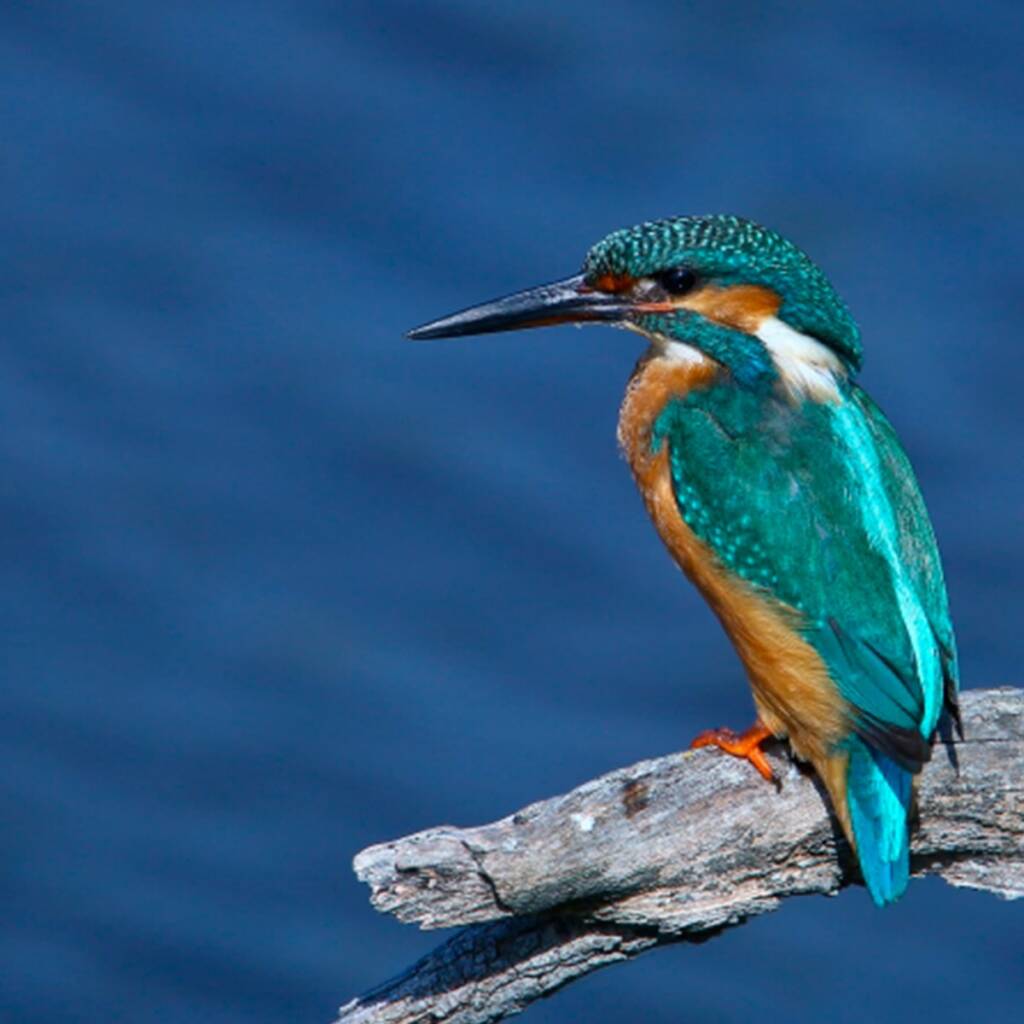
The kingfisher is one of the most striking birds that visits the Natural Park. In winter, it can be found along the coast, as it prefers to breed in slow-flowing rivers with some trees and riverbanks suitable for nesting. It nests in sand or earth banks, where it digs a tunnel of approximately 1 metre leading to the nesting chamber. There it makes a nest where it raises its chicks on a bed of piled-up fish bones. It feeds mainly on fish, although it also eats aquatic arthropods and their larvae. It waits on tree branches, alert to any movement in the water that may indicate the presence of a fish, and then quickly dives into the water to catch its prey with its dagger-shaped beak. Its bright colours become even more vivid when it emerges from the water.
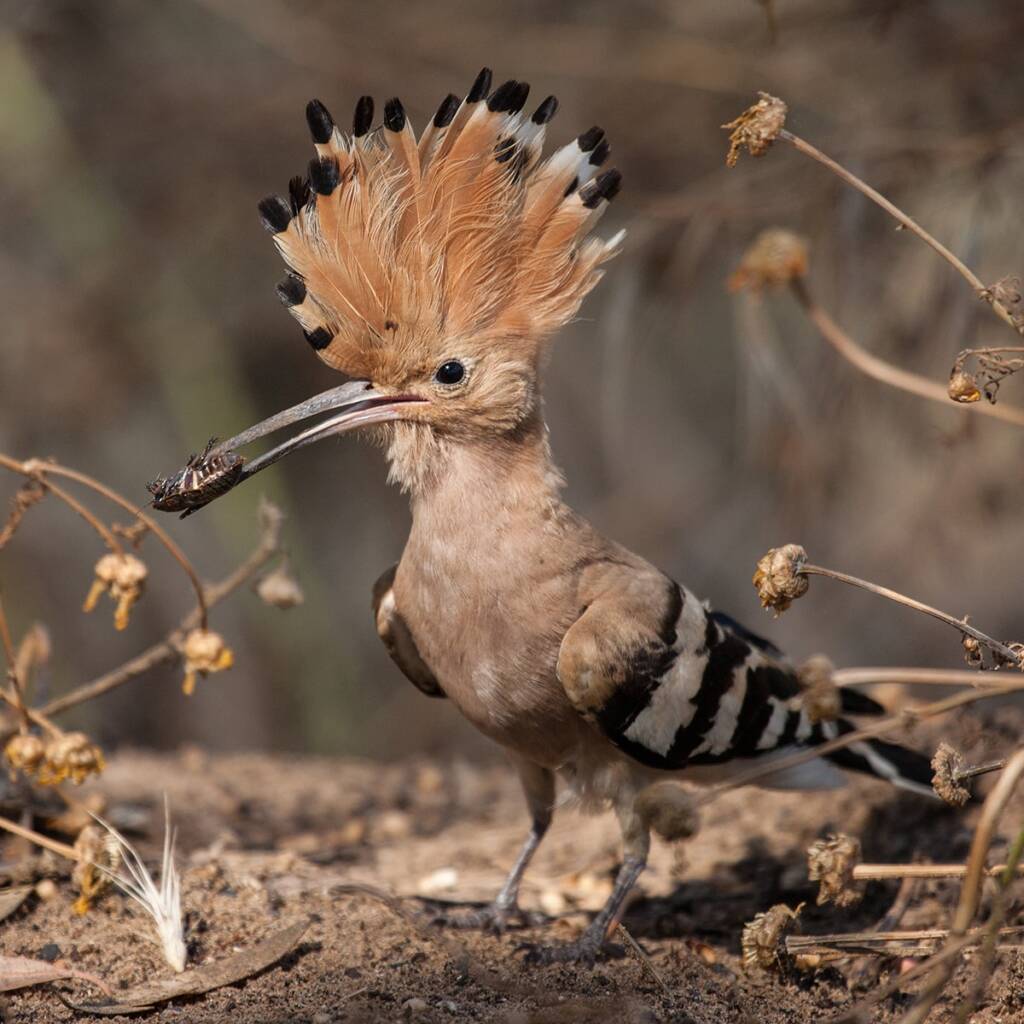
The hoopoe is another bird that is easy to spot thanks to its distinctive plumage. It breeds in agricultural areas and open landscapes with small woodlands, hedgerows and shrubs. It is a summer visitor to the Iberian Peninsula, although in the south and east it may be resident or spend the winter there. In autumn, it migrates to northern and central Africa and returns the following February with the arrival of warmer weather. It spends a great deal of time on the ground and needs areas of short grass in which to feed. It feeds by probing moist soil with its beak to catch insects and their larvae, especially crickets and large beetles. It also feeds on pine processionary caterpillars, of which it is a natural predator. It nests in holes in trees, stone walls or nest boxes, among other places.
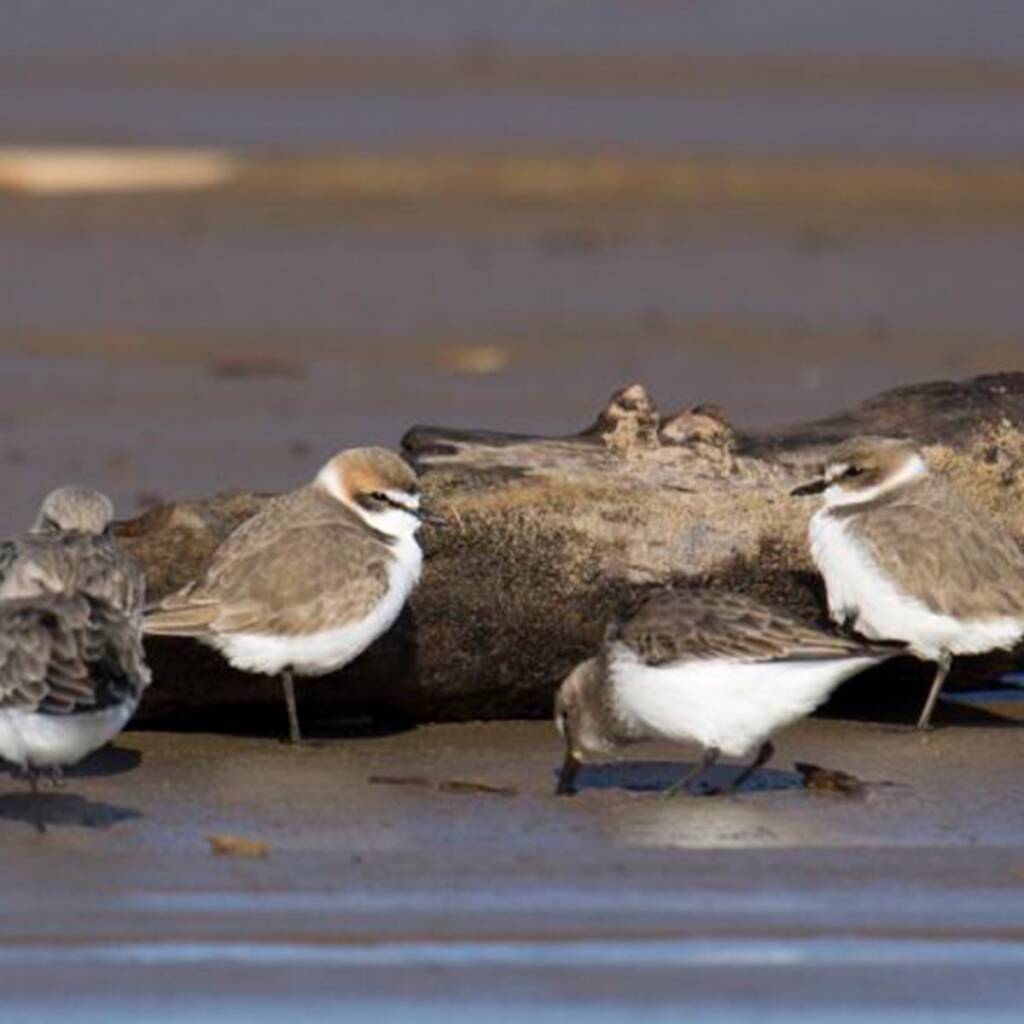
If we head towards the coastal areas, we can see small birds running across the sand. These birds are Kentish plovers. They nest along our coastline during spring and summer, with a first clutch laid in April and May and a second one in June. They make their nests in the sand, where they lay their eggs, and protect them with natural debris washed up by the sea. In some areas of the coast, due to the intense pressure of tourism, they have been forced to move their nests further inland, towards nearby fields.
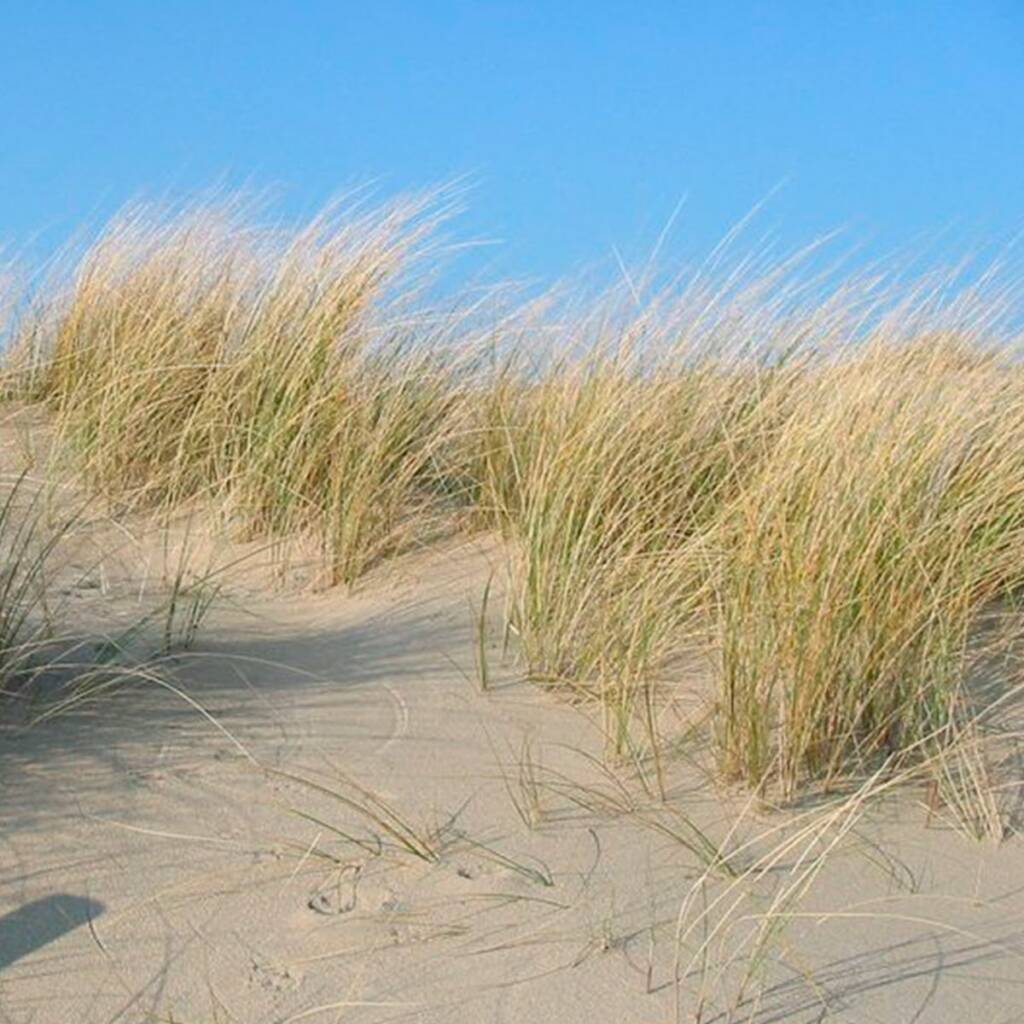
Although birds are often the most eye-catching, thanks to both their plumage and their song, we should not overlook the plants. Here in the Natural Park, we find a species characteristic of dune environments: marram grass. This plant helps to stabilise dunes before they are replanted with shrubs or trees such as pine trees. It is used because of its remarkable ability to take root in shifting sands and retain sand carried by the wind. Today, due to the destruction of its habitat, the dune systems, it has become a scarce species along the Catalan coast.
Has this sparked your curiosity? Would you like to discover more?
Next to the restaurant is Ocitània, where routes by Burricleta and Segway have been prepared to help you discover some of these magical places. We have selected viewpoints where you can admire the Natural Park and the Empordà in all their splendour, as well as hidden corners full of nature and culture that we know you will love.
For more information, you can consult the Natural Park’s short guide , as well as its website. We also encourage you to take a look at the guide to the 108 birds of the Empordà Natural Parks, an essential resource for both young and experienced birdwatchers!
Photographs taken from the Ornitho website, by the Catalan Institute of Ornithology.
And if you would like to meet some of the local producers we work with at the restaurant, we recommend visiting these producers:
– Mas Geli, the wine of Pals. Visits can be arranged.
– Mooma, where you can visit an agricultural producer of apple juices and ciders made with apples from the Empordà
– Molí de Pals, visit an environmentally responsible rice producer, where you can take a guided visit to discover this highly regarded local product.
– DosKiwis, visit a craft brewery created by a woman from the Empordà and an Australian. You can discover the production process behind many varieties of beer, some of which you can taste at A-Putt.
– Oli Pedrigolet, much more than olive oil: tradition transformed into flavour. 100% Argudell Extra Virgin Olive Oil. Restaurant A-Putt is an official point of sale!
And also:
– Museu Rural a Can Pou
The Rural Museum of Palau-Sator was created through the recovery of old farming tools and machinery linked to traditional rural life in our region. Empordà olive oil tastings.
– Museu de la confitura
A place where you can discover all the secrets hidden inside a jar of artisan jam.